Interview with Xavier Fuertes, manager of the College of Journalists (2010–2016)
Xavier Fuertes: «We wanted an ERP that adapted to us, not us to an ERP»
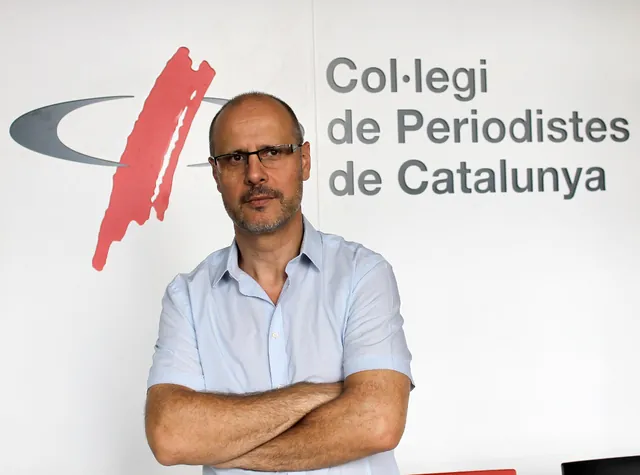
BARCELONA — Xavier Fuertes, manager of the Col·legi de Periodistes de Catalunya and a NaN·tic client, explains in this interview what management needs his organisation had and why it chose to implement a free-software solution. The manager says he has high hopes for the growth and improvement opportunities offered by open source business-management software.
What are the CPC's management needs?
The CPC has two entities to manage: the College itself, a service organisation for journalism professionals, and, on the other hand, a group of 13 kiosks in the city centre.
What tools did it use until now?
The College had scattered software for managing its different areas. The most important part was managed with a very old computer program that did not meet our current needs, let alone allow us to think about future challenges.
Why did you decide to change the management tools?
The obsolescence of the tools we worked with was obvious, and this had not been addressed earlier due to a lack of initiative and resources. We were also convinced that the tools available to us were greatly limiting us.
What was the process? How did you seek advice?
We hired the services of a consultancy, Àbacmedia, which presented us with a study of the viable and affordable alternatives available on the market.
Was free software the first option from the outset?
Indeed, the consultancy put open-source tools on the table as the most reasonable option and the one that best matched what we needed.
Why?
Free software guaranteed that we would not be captive to a particular brand or manufacturer; the community behind each tool assured us of the product's continuity and, ultimately, its ongoing evolution. Faced with this scenario, we did not consider any alternative that was not open source.
What were the main advantages you saw in free software?
The same ones I mentioned before: security, freedom, growth... We did not want to be slaves to a manufacturer. We wanted an ERP that adapted to us, not us to an ERP.
And the main doubts or drawbacks?
Free software was a territory the College did not know, so we had to be brave. But the boldness paid off.
How did you come to know NaN·tic?
By looking for distributors and implementers of free-software ERP systems in Catalonia.
How has the implementation process gone?
It was complicated as regards mechanising the kiosks, since this is the first time it has been tackled in an integrated way, but NaN·tic has provided the appropriate answers we expected.
What immediate improvements in the organisation's management do you expect?
Knowledge of the flow of information on purchases, sales and product turnover in the kiosks; the ability to make improvement and innovation decisions; more information and better communication with members... In addition, this new ERP feeds our website directly, which makes our work much easier. In short, we will manage the College better and provide better service to our members.
And in the long term?
We hope the product's scalability will enable us to innovate and address future needs, some of which we surely cannot even imagine yet. We want to keep a close eye on software improvements so that, if we are interested, we can incorporate them and obtain an immediate return.
Would you recommend NaN·tic?
Absolutely.
Why?
Not only because of the product, but also because of its capacity for work and professional rigour. People are key to every change, and the NaN·tic team helped us at a pivotal moment in our history as a College.
